

Some collectible mugs are easy to overlook.
They sit quietly in cabinets, get used every day, and rarely invite a second glance. Others, however, slow you down. They make you curious. You find yourself turning them in your hands, noticing details you didn’t see at first, and wondering who designed them — and why.
Those are the mugs with stories.
And once you start hearing those stories, the way you look at collectible mugs changes forever.
Why This Mug Made Me Pause
I’m genuinely excited to share the history behind one of the rare and beautiful mugs in the CupofMood shop — not just because of its design, but because of what it represents.
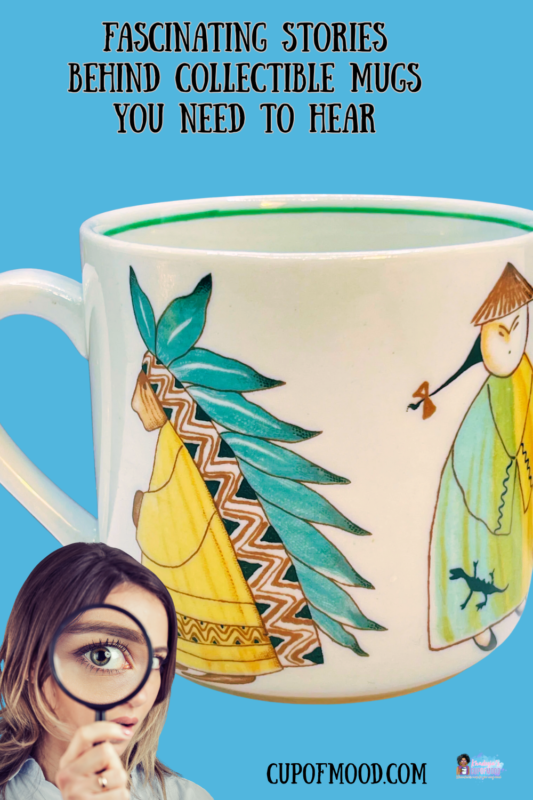
When I first came across the Parade People mug, I appreciated it for its visual charm. The colors were lively. The figures felt joyful and expressive. It was the kind of mug that naturally draws your eye. But at the time, I didn’t fully understand why it stayed with me.
That understanding came later.
And it didn’t come from a catalog or a price guide — it came from curiosity.
How Travel Shapes the Way I See Objects
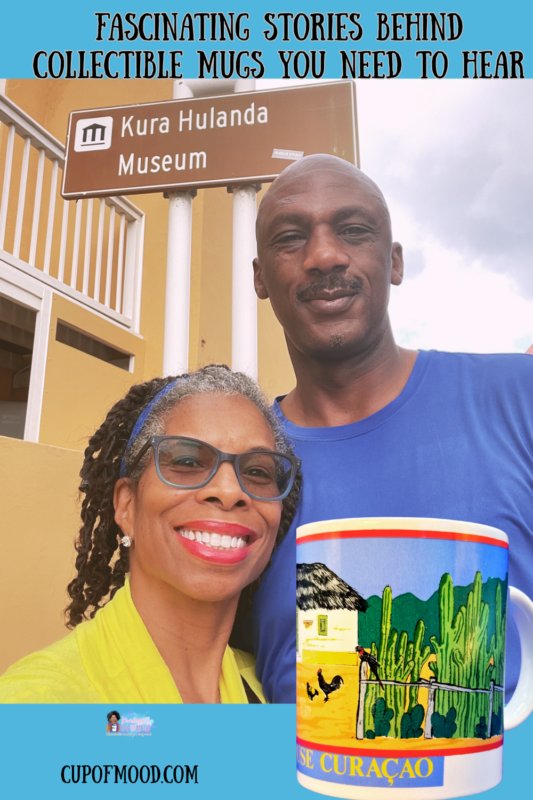
When Michael and I travel, one of the things we look forward to most is visiting museums. Not just the big, famous ones — but local museums too. The kind that tell the story of a place through its people, its struggles, its traditions, and its everyday life.
We’re especially drawn to exhibits that place local history within the wider context of world history. Seeing how cultures intersect — how trade, colonization, migration, and creativity influence one another — has a way of reshaping how you see the present.
That habit of looking deeper doesn’t stop when we leave a museum. It follows us into how we see objects in our everyday lives.
Including mugs.
Listening to History Changed How I Looked at This Cup
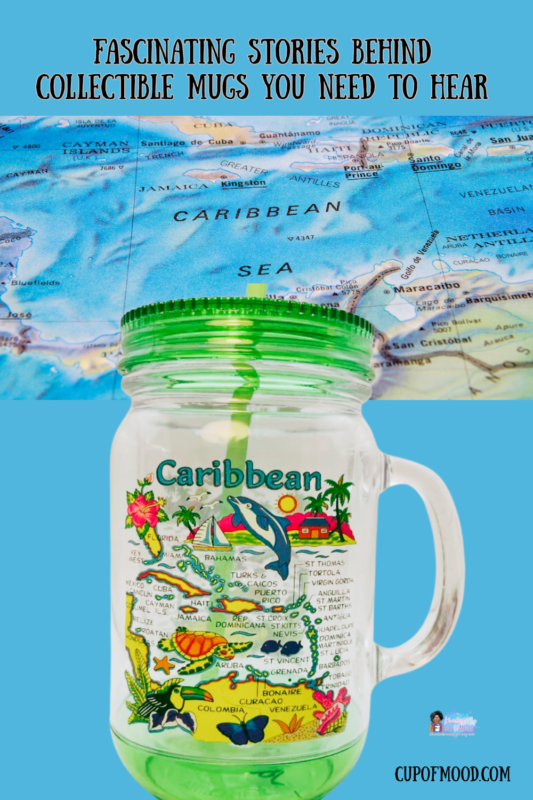
Recently, I’ve been listening to the audiobook Caribbean by James Michener. It’s an expansive, carefully researched account of Caribbean history, beginning in pre-colonial times and moving forward through centuries of transformation.
I haven’t reached the later chapters yet, but even early on, the book offers a powerful perspective on Indigenous people — how they lived, how they were viewed by outsiders, and how their stories were often reshaped or simplified over time.
Listening to it sharpened my awareness of representation.
It made me think more deeply about how cultures are portrayed, especially in art and design. And it made me want to revisit this mug — not just as a collectible object, but as a reflection of the time and perspective in which it was created.
Looking at the Parade People Mug With New Eyes
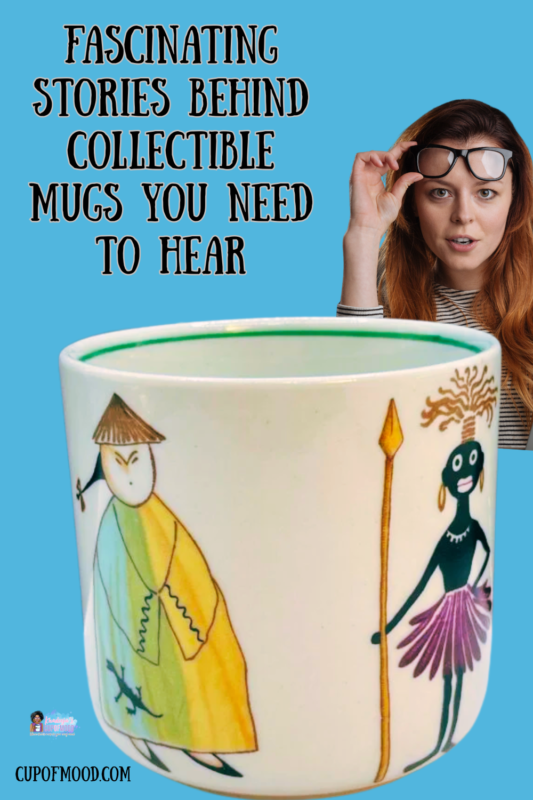
When I picked the mug up again, I noticed things I hadn’t paid attention to before.
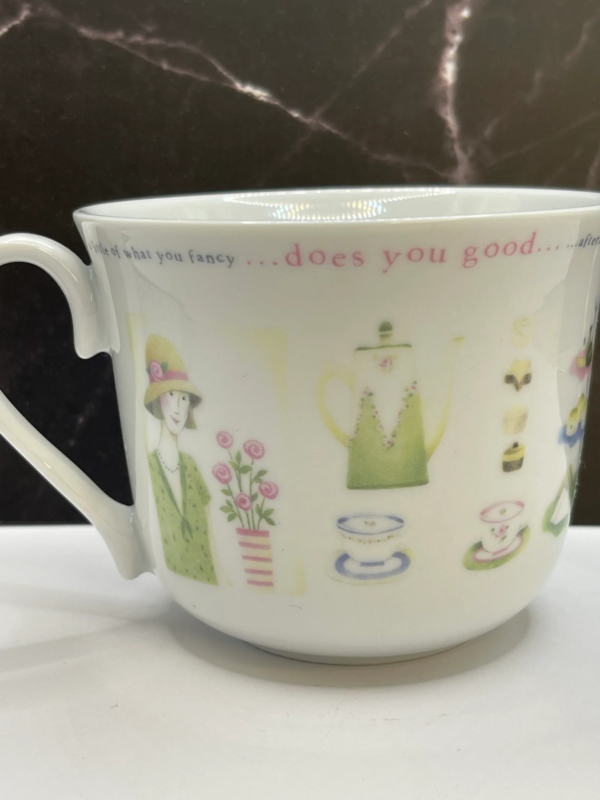
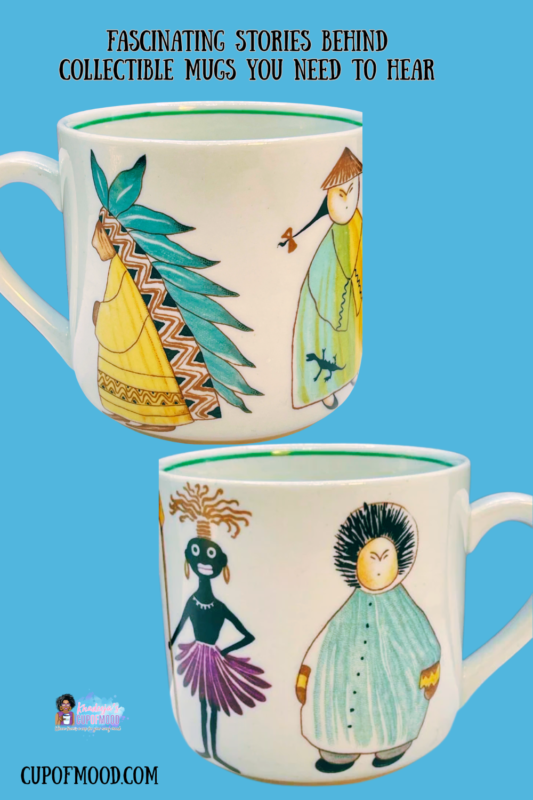
The figures weren’t just decorative. They formed a procession — a continuous movement that wrapped around the mug. Each figure was distinct, yet connected to the next. Clothing, posture, and expression were simplified, but clearly intentional.
This wasn’t a random pattern.
It was storytelling.
And that realization shifted the mug from “interesting” to meaningful.
When Everyday Objects Were Designed to Matter
To understand why mugs like this exist, it helps to understand the design philosophy that shaped them.
During the mid-20th century, Finnish ceramic design was grounded in everyday life. Designers believed practical objects should also be beautiful — not in a showy or precious way, but in a way that made daily use feel thoughtful and satisfying.
In fact, Finnish design has long embraced the idea that objects should earn their place in people’s routines, blending function with a quiet kind of beauty that invites use rather than display.
This belief is woven throughout Finnish culture, where design is meant to be lived with and enjoyed by everyone, a philosophy often described as how design fills the fabric of Finnish life and emphasizes practicality, accessibility, and purpose. You can see this perspective reflected in Finnish design history here.
That way of thinking deeply resonates with how I approach CupofMood. I believe the drinkware you use every day should feel good in your hands, work the way it’s meant to, and bring a sense of enjoyment to even the smallest moments.
Many of the mugs in the CupofMood shop reflect this same balance — pieces that are functional, visually engaging, and meaningful in how they’re used, not just how they look on a shelf.
Finnish designers carried this mindset into ceramics, creating mugs that were never treated as afterthoughts. Art didn’t belong only in galleries. It belonged in kitchens, on tables, and in the repeated rituals of everyday life.
As a result, mugs became opportunities — objects where form, function, and meaning could come together in a way that feels natural, intentional, and lasting.
I’m proud to say CupofMood has a perfect example of this Finnish approach to life in the Anja Juurikkala Parade People Mug.
Why This Philosophy Matters at CupofMood
That belief resonates deeply with how I curate CupofMood. In fact, I talk a lot about this in this blog: Sip Your Way To Happiness With Inspirational Mugs – CupofMood
At CupofMood, drinkware isn’t just about function. It’s about feeling. It’s about connection. And sometimes, it’s about story.
The mug you reach for every morning becomes part of your routine. Over time, it becomes familiar. When that mug also carries meaning — whether through design, history, or personal connection — it turns an ordinary moment into something more intentional.
That’s why I care so much about understanding why a mug exists the way it does.
The Difference Between Decoration and Intention
Not every illustrated mug tells a story. Some are purely decorative. And that’s okay.
But collectible mugs — the ones that hold long-term interest — tend to show intention.
You can feel it when:
- imagery wraps thoughtfully around the mug
- design elements repeat with purpose
- nothing feels accidental
These are subtle cues, but once you learn to notice them, they become impossible to ignore.
The Parade People mug carries those cues.
Why Stories Add Value (Even Before Rarity)
People often assume that rarity is what makes something collectible. While rarity plays a role, it’s rarely the whole story.
A mug becomes truly collectible when:
- it reflects a design philosophy
- it captures a cultural moment
- it shows artistic intent
- it invites curiosity
Stories don’t inflate value artificially. They explain it.
When you understand the story behind an object, you understand why it matters — and that understanding changes how you relate to it.
That’s one reason I appreciated learning the story about the artist who created the Anja Juurikkala Parade People Mug. She has an interesting story as you’ll read later.
Slowing Down Is Part of the Experience
One of the things I appreciate most about mugs like this is that they invite you to slow down. Because on mugs like this, you don’t see everything at once.
No, you have to turn the mug if you want to see more. Your curiosity make you have to look again. You want to see and notice details. You enjoy the satisfaction watching the story unfold, sip by sip.
Indeed, in a world that moves quickly, that kind of interaction feels almost intentional in itself.
And that’s part of what makes collectible mugs so compelling.

This Is Where the Story Begins
This mug is just one example.
There are countless mugs shaped by different cultures, designers, and moments in history — each with its own story waiting to be understood. This blog exists to begin that conversation.
Because once you start listening to the stories behind collectible mugs, you realize something important:
They were never meant to be silent.
Once you start paying attention to collectible mugs, one question comes up again and again:
Why does this mug feel different?
Not just nicer. Not just older. But different in a way that’s hard to explain at first.
That difference usually comes down to three things working together:
- the designer
- the historical context
- and the intention behind the design
This is where mugs stop being objects and start becoming cultural artifacts.
Why Designers Matter in Mug Collecting
In everyday life, mugs are often anonymous. We use them without knowing who designed them or why they look the way they do. But in the world of collectible mugs, the presence of a designer changes everything.
A designer brings:
- a point of view
- a visual language
- and a set of values
When you know who designed a mug, you gain access to a larger creative conversation.
The Parade People mug was illustrated by Anja Juurikkala, a Finnish designer working during a period when illustration played a meaningful role in everyday ceramics.
Her work reflects a time when designers were encouraged to experiment, tell stories, and bring personality into functional objects.
That alone sets the mug apart. So let me tell you a little more about this amazing artist.
The Artist Behind the Collectible Mug: Anja Juurikkala’s Story
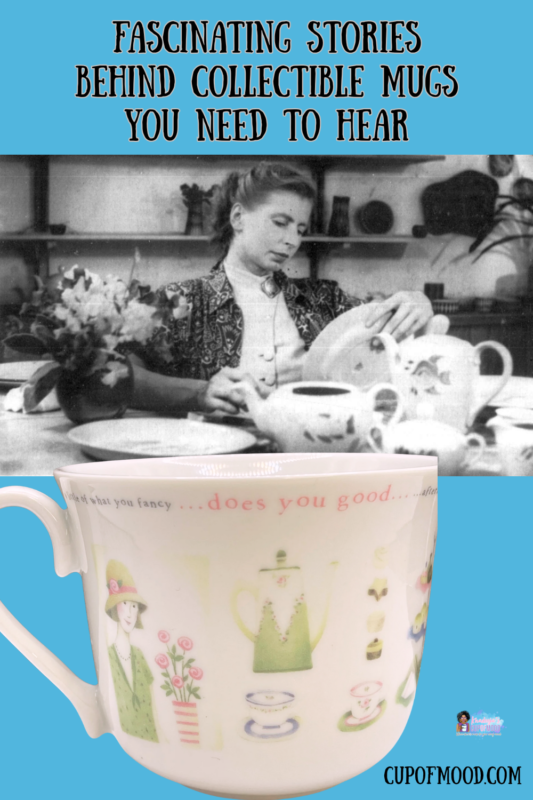
Anja Juurikkala (1923–2015) was a Finnish ceramic designer whose career bridged everyday design and fine art. She worked in Arabia’s art department from the late 1940s through 1960, during a period when Finnish ceramics were gaining international attention for their balance of function and personality.
While she contributed to industrial design, Juurikkala never treated decorative work as secondary. Her ceramic designs carried the same care and character that later defined her sculptural career, which included public works installed in several Finnish cities.
After leaving Arabia, she transitioned fully into sculpture, studying in Finland and in Milan, where her work focused on expressive, human-centered forms rather than abstraction. Her life and artistic path are well documented by the Heinola City Museum and in Finnish cultural records, including biographical material published by Heinola institutions and a dedicated monograph released in 2016.
You can explore more about her life and work through sources such as https://heinolanseurakunta.fi and https://verkkokauppa.heinola.fi, which help place her ceramic work — including mugs like this one — within the broader arc of her artistic legacy.
A Design Era That Valued Everyday Art
To understand why designers like Juurikkala were given this freedom, it helps to look at the broader design environment of mid-20th century Finland.
This was a period when design wasn’t treated as luxury. It was treated as a public good.
Finnish design philosophy emphasized:
- accessibility
- functionality
- and beauty as part of daily life
Mugs, plates, and household objects weren’t considered too small to matter. Instead, they were seen as opportunities to bring creativity into ordinary routines.
Companies such as Arabia of Finland supported this idea by collaborating directly with artists and illustrators. The result was drinkware that felt thoughtful rather than generic.
That environment allowed designers like Juurikkala to experiment with narrative illustration on mugs — something that might have been dismissed elsewhere as unnecessary or impractical.
Illustration as Storytelling, Not Decoration
One of the most important distinctions collectors learn to make is the difference between decoration and storytelling.
Decoration fills space.
Storytelling communicates meaning.
Illustrated mugs from this era often fall into the second category.
Rather than placing a single image on one side of a mug, designers used repetition and movement. The artwork wrapped around the mug, creating a sequence rather than a snapshot.
The Parade People mug does exactly that.
Figures appear one after another, forming a procession that feels continuous. There is no clear beginning or end. Instead, the design encourages the viewer to turn the mug, follow the movement, and engage with it over time.
That interaction is intentional.
Representation and Perspective in Mid-Century Design
Looking at illustrated mugs from the mid-20th century also means grappling with how cultures were represented at the time.
The figures on the Parade People mug are inspired by traditional clothing from different cultures as viewed by someone from another culture. They are simplified, symbolic, and stylized rather than precise or documentary.
That reflects the design norms of the era.
Designers often expressed curiosity and admiration for global cultures, but they did so through a European lens shaped by travel, trade, and imagination rather than lived experience.
This doesn’t mean the design lacks value. It means it carries context.
And context is one of the most important tools a collector can have.
Why Context Adds Depth
Some collectors worry that acknowledging historical perspective will diminish their enjoyment of an object. In reality, it often does the opposite.
Understanding context allows you to:
- appreciate intention without romanticizing it
- recognize limitations without dismissing the work
- and see objects as products of their time
When you understand when and why a mug was created, it becomes more interesting — not less.
The Parade People mug becomes a reflection of how the world was being imagined and interpreted at a specific moment in history. That makes it a valuable reference point, not just a decorative item.
What Seasoned Collectors Learn to Notice
As collectors gain experience, the questions they ask change.
Instead of:
- “Is this rare?”
They begin to ask:
- “What story does this tell?”
- “Why was this design chosen?”
- “What does this reflect about its time?”
These questions lead to deeper understanding.
They also lead to better collections.
Because when you collect based on curiosity and knowledge, you’re less likely to chase trends and more likely to build something meaningful over time.
Why Designer-Led Mugs Hold Long-Term Interest
Designer-led mugs tend to age well in collections.
That’s because they:
- reflect a specific creative voice
- connect to a broader design movement
- reward continued learning
Even after years of ownership, these mugs often reveal new details. The more you know about design history, the more you notice.
This is why collectors often return to the same pieces again and again — not out of habit, but out of appreciation.
Condition as Preservation, Not Perfection
Condition plays an important role in collectible mugs, but it’s not about perfection.
It’s about preservation.
A mug that retains:
- strong color clarity
- intact illustration
- minimal wear
helps preserve the designer’s original intent.
When illustration remains vibrant and details remain visible, the mug continues to communicate what the designer intended — even decades later.
That preservation strengthens both enjoyment and historical value.
From Mug to Reference Object
At a certain point, collectible mugs stop being individual finds and start becoming reference objects.
They help collectors:
- compare styles across designers
- understand shifts in design philosophy
- recognize recurring themes and motifs
The Parade People mug serves this role well. It offers insight into illustration-driven ceramics, mid-century cultural curiosity, and Finnish design values — all through a single, functional object.
That’s the kind of depth collectors value most.
Why This Knowledge Empowers Collectors
Knowledge doesn’t complicate collecting. It simplifies it.
When you understand design history and context, you feel more confident trusting your instincts. You don’t need constant validation. You know what you’re looking at — and why it matters.
That confidence is what allows collectors to build collections that feel personal, intentional, and satisfying over time.
And that’s where real collecting begins.
Collecting With Confidence, Community, and Meaning
By the time collectors reach this stage in their journey, something important has already shifted.
They are no longer asking whether a mug is “worth it” based on trends or outside opinions. Instead, they’re asking whether it means something to them — whether it reflects curiosity, learning, and intention.
That shift is the difference between accumulating objects and building a collection.
And it’s where collecting becomes deeply satisfying.
How Knowledge Changes the Way You Collect
One of the most surprising things about collecting is that knowledge doesn’t make it harder. It makes it calmer.
When collectors understand design history, context, and intention, they stop second-guessing themselves. They don’t feel pressured to chase every rare piece or worry about missing out. Instead, they develop clarity.
They begin to recognize what resonates with them — and why.
That clarity creates confidence.
Rather than reacting to scarcity or hype, informed collectors move deliberately. They choose pieces that align with their values, interests, and curiosity. Over time, their collections feel cohesive instead of scattered.
That cohesion doesn’t happen by accident. It comes from learning.
Developing a Collector’s Eye Over Time
A collector’s eye isn’t something you’re born with. It’s something you develop.
At first, many people are drawn to mugs based on surface appeal — bright colors, playful imagery, or nostalgia. There’s nothing wrong with that. In fact, it’s often the entry point.
But as collectors learn more, their attention shifts.
They start noticing:
- how imagery is arranged
- how designs repeat or evolve
- how balance and movement guide the eye
Indeed, they begin to see patterns across different mugs and designers. They recognize when something feels intentional versus generic.
This doesn’t make collecting less fun. It makes it richer.
Every new piece becomes an opportunity to apply what you’ve learned — and to learn something new.
Asking the Right Questions Before You Add a Mug
Confident collectors tend to slow down before adding a new piece.
They ask questions such as:
- Who designed this mug, if known?
- What design era does it reflect?
- Does it tell a story or represent a perspective?
- How does it fit with what I already collect?
These questions aren’t meant to limit you. They’re meant to guide you.
When you pause to consider them, you build a collection that feels intentional rather than impulsive.
And that intention is often what gives a collection lasting value — emotionally and historically.
Why Collecting Is About More Than Ownership
At a certain point, collectors realize that ownership is only one part of the experience.
The deeper satisfaction comes from:
- understanding what you own
- being able to talk about it
- sharing why it matters
A mug with a story becomes a conversation piece. And like great conversation pieces, it invites questions. It encourages storytelling. It even allows you to share what you’ve learned with others.
That’s when collecting becomes communal rather than solitary.
The Role of Community in Collecting
No collector learns in isolation.
Whether it’s through conversations, blogs, books, or shared experiences, collecting is shaped by exchange. Learning what others notice, value, and question expands your own perspective.
That’s why community matters so much in the world of collectibles.
When collectors share their knowledge, everyone benefits.
Collector’s Corner: Sharing the Stories Behind Your Mugs
That belief is what inspired Collector’s Corner.
Collector’s Corner is a space dedicated to collectors who want to share their rare mugs and drinkware — not to compete, but to connect. It’s about showcasing pieces with meaning and explaining why they matter.
If you have a mug that carries history, cultural significance, or personal meaning, Collector’s Corner is a place for that story.
Maybe it’s a designer mug you’ve researched. Or maybe it’s a souvenir tied to a meaningful trip.
Maybe it’s a piece you’ve held onto for decades.
Every story adds to the larger picture of why collectible mugs matter.
By sharing what you’ve learned, you help others learn too.
CupofMood as a Knowledge-Based Collection

At CupofMood, the goal has never been to simply sell mugs.
The goal is to curate drinkware with intention — pieces that reflect design history, cultural context, and emotional resonance. This blog is part of that mission.
By documenting the stories behind collectible mugs, CupofMood aims to be a place where curiosity is encouraged and learning is valued.
That approach supports collectors who want more than surface-level information. It supports people who enjoy understanding why something matters.
And it allows each mug to stand as more than an object — it becomes part of a shared narrative.
Looking Ahead: More Stories Still to Come
The Parade People mug is just one example of the kind of piece that deserves a closer look.
There are many more collectible mugs shaped by different designers, cultures, and moments in history — each with stories waiting to be explored. Some are bold. Some are subtle. All of them offer something worth noticing.
As the CupofMood collection continues to grow, so will the stories behind it. My goal is to keep sharing those stories in a way that feels thoughtful, approachable, and grounded in genuine curiosity.
Because understanding objects helps us understand the world — and ourselves — a little better.
The CupofMood Club Experience
For collectors who enjoy early access, exclusive finds, and thoughtfully curated experiences, the CupofMood Club already offers a deeper level of connection.
But it’s also evolving.
Behind the scenes, I’m working on new ways to make the CupofMood Club feel even more connected and more special — creating space for collectors to engage with one another, discover rare pieces first, and feel part of something that goes beyond simply shopping. While the details are still taking shape, the goal is clear: more community, more intention, and a greater sense of belonging for people who truly appreciate meaningful drinkware.
Members will continue to enjoy early looks at new additions and access to carefully selected mugs, but the Club is moving toward something more — a place where collecting feels shared, personal, and quietly exclusive.
It’s being shaped for people who collect with intention and who value not just the objects they bring into their homes, but the stories and connections that come with them.
Collecting With Patience and Purpose
Indeed, some of the most meaningful collections are built slowly.
They evolve as interests deepen, knowledge expands, and tastes mature. They reflect learning as much as acquisition.
Collecting doesn’t have to be fast to be fulfilling. In fact, patience often leads to the most satisfying discoveries.
When you give yourself permission to learn, to wait, and to choose intentionally, collecting becomes a source of enjoyment rather than pressure.
☕ Final Sip
Some mugs simply hold a drink.
Others hold attention.
The ones that stay with us are the ones that carry stories — stories of design, culture, and perspective that reward curiosity and care.
When you take the time to hear those stories, you don’t just collect mugs.
You collect meaning.
Until next time,
Namaste,
Khadeeja